A white patch on the skin can bring a lot of questions. Is it spreading? Will it ever go away? Did I do something to cause it?
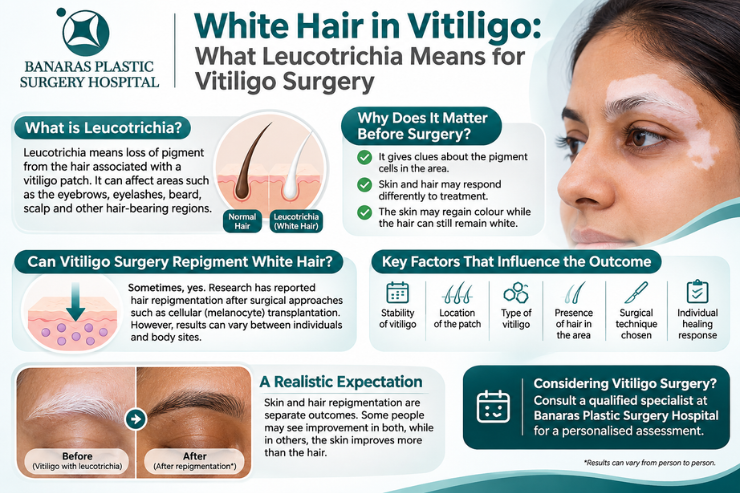
Let us clear up one thing first: vitiligo is not contagious, it is not caused by food combinations, and it is not your fault. It happens when the cells that give skin its colour, called melanocytes, stop working in some areas.
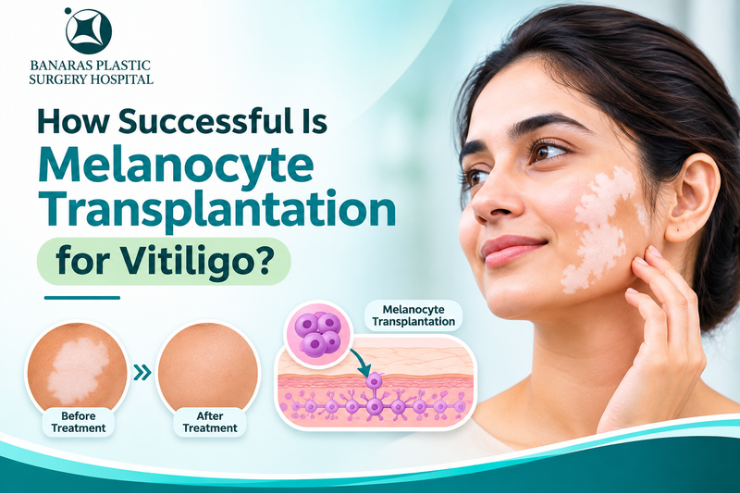
When creams and light therapy do not give enough colour back, many people ask about surgery. Melanocyte transplantation is one of the most trusted options for stable vitiligo. In well-selected patients, studies report visible colour return in roughly 70% to 90% of cases.
How Successful Is It?
In stable vitiligo, melanocyte transplantation shows good repigmentation in a majority of patients. Studies report that roughly 70% to 90% of properly selected patients regain a significant amount of colour in treated patches.
Success depends mainly on three things:
- How stable the vitiligo is before surgery
- Which body area is treated
- The skill of the surgeon and the quality of aftercare
What Is Melanocyte Transplantation?
Melanocytes are the cells that make melanin, the pigment that gives skin its colour. In vitiligo, these cells are lost or stop working in certain areas.
Melanocyte transplantation moves healthy pigment cells from a normally coloured area of your own skin to the white patches. Because the cells come from you, the risk of rejection is very low.
You may also hear it called melanocyte-keratinocyte transplant procedure (MKTP) or non-cultured epidermal cell suspension transplant.
How Is the Procedure Done?
The procedure is usually done under local anaesthesia and takes a few hours.
Step-by-Step Process
- Donor skin collection: A very thin layer of skin is taken from a hidden area, often the thigh or buttock.
- Cell separation: The skin is treated with an enzyme to release melanocytes and keratinocytes into a liquid suspension.
- Patch preparation: The top layer of the white patch is gently removed with a laser or a dermabrasion tool.
- Application: The cell suspension is spread over the prepared area.
- Dressing: The area is covered with a special dressing to hold the cells in place.
A small donor area can treat a patch many times its size. This is one of the main advantages of the technique.
Who Is a Good Candidate?
Not everyone with vitiligo is suited for surgery. A thorough skin assessment comes first.
You May Be a Good Candidate If
- Your vitiligo has been stable for at least 12 months, meaning no new patches and no spreading
- Your patches have not responded to creams or light therapy
- You have segmental or localised vitiligo
- You are in good general health and have realistic expectations
Surgery May Not Be Advised If
- Your vitiligo is still spreading
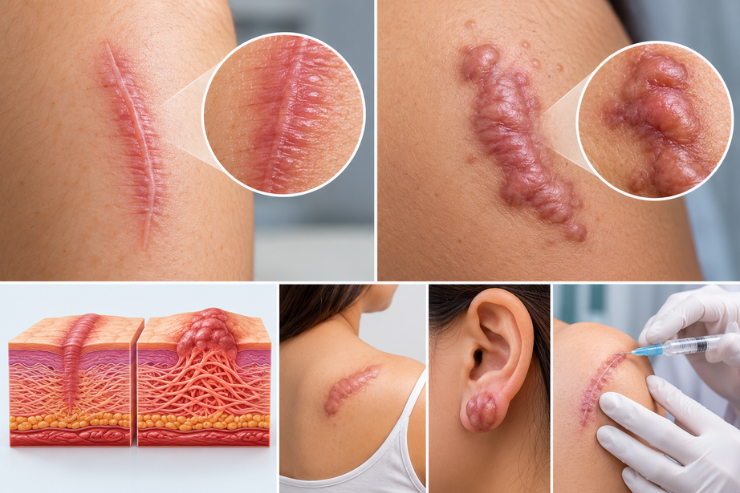
- You tend to form keloids or thick scars
- You have an active skin infection or a bleeding disorder
- You are expecting a guaranteed, perfect result
Which Types of Vitiligo Respond Best?
Results differ by type and by body site.
Better Response
- Segmental vitiligo: Often has the highest success rates, as it is usually stable early
- Focal vitiligo: Small, isolated patches respond well
- Face, neck, and trunk: These areas have a good blood supply and tend to repigment well
Slower or Lower Response
- Lips, fingertips, and toes
- Knuckles, elbows, and knees
- Areas with little hair or thin skin
- Widespread, active non-segmental vitiligo
What Results Can You Expect?
Colour does not return overnight. Repigmentation is gradual.
- First 2 weeks: The area heals with dressing
- 4 to 8 weeks: Early colour starts appearing, often as small dots or patches
- 3 to 6 months: Most of the pigment spreads and settles
Some patients achieve more than 90% colour return in treated areas. Others see partial improvement. A smaller group sees little response, which is why the right selection matters.
Recovery and Aftercare
Good aftercare protects the transplanted cells while they settle.
- Keep the dressing dry and undisturbed for about a week
- Avoid heavy exercise and sweating during the early days
- Do not scratch, rub, or pick at the treated area
- Protect the area from direct sun after healing
- Follow your doctor’s guidance on medicines and follow-up visits
The donor site usually heals within one to two weeks and may look slightly pink for a while.
Melanocyte Transplantation vs Other Vitiligo Treatments
Surgery is usually considered after other options have been tried.
- Topical creams and ointments: Useful for early or small patches
- Narrowband UVB phototherapy: Helps many patients, especially with widespread vitiligo
- Excimer light therapy: Targets small patches precisely
- Punch or blister grafting: Older surgical methods, better for small patches
- Melanocyte transplantation: Preferred for larger stable patches that need smoother, more even colour
Often, doctors combine surgery with light therapy to improve and maintain results.
Does the Result Last?
In stable vitiligo, the repigmented skin often remains for years. Long-term results depend on whether the disease remains inactive. If vitiligo becomes active again, new patches can appear elsewhere, though the treated areas often stay coloured.
Regular follow-up, sun protection, and managing stress and overall health all help support lasting results.
Things to Consider Before Deciding
- Have your skin evaluated for disease stability
- Ask about the expected success for your specific patch location
- Discuss costs, number of sessions, and recovery time
- Understand that results vary and no outcome can be guaranteed
- Choose a qualified, experienced plastic or dermatologic surgeon
Final Thoughts
Melanocyte transplantation offers real hope for people with stable vitiligo, with a high chance of visible colour return when the patient and patch are well selected. It is not a quick fix, but with patience, proper aftercare, and realistic expectations, many people see a meaningful improvement in how their skin looks.
If you have been thinking about vitiligo treatment in Varanasi or elsewhere, a careful skin assessment with a qualified specialist is a good first step. It can help you understand which option suits your skin, and when.
Author:
Dr. Prashant Baranwal
M.B.B.S., M.S., M. Ch
Plastic & Cosmetic Surgeon
Director, Banaras Plastic Surgery Hospital.
Frequently Asked Questions
1. Is melanocyte transplantation permanent?
In many people with stable vitiligo, the restored colour lasts for years and is often long-term. However, vitiligo is a chronic condition, so new patches may appear in other areas if it becomes active.
2. Is the procedure painful?
It is done under local anaesthesia, so you should not feel pain during the procedure. Mild soreness, tightness, or itching afterwards is common and usually settles within days.
3. How long does it take for the white patches to regain colour?
Colour usually starts appearing after 4 to 8 weeks. Most of the improvement is seen over 3 to 6 months, and some patches take longer.
4. Can vitiligo come back after the transplant?
The treated patch often stays pigmented if the vitiligo is stable. But vitiligo can still develop elsewhere on the body, as the underlying condition is not cured by the procedure.
5. Will the new skin colour match the rest of my skin?
In most cases, the colour blends well, but a perfect match is not guaranteed. Some patients notice a slightly lighter or darker tone, which may improve with time or with additional light therapy.
This blog is for general educational purposes only and is not a substitute for professional medical advice, diagnosis, or treatment. Vitiligo and its treatment outcomes vary from person to person, and no result can be guaranteed. Please consult a qualified medical professional for advice specific to your condition.