That sharp, nagging pain near your big toe often isn't bad luck; it usually traces back to how the nail was cut. A cut taken too short, or a corner rounded off without a second thought, is often where the trouble quietly begins. This blog walks through five everyday cutting habits behind it, the right way to trim instead, and when it's worth getting looked at.
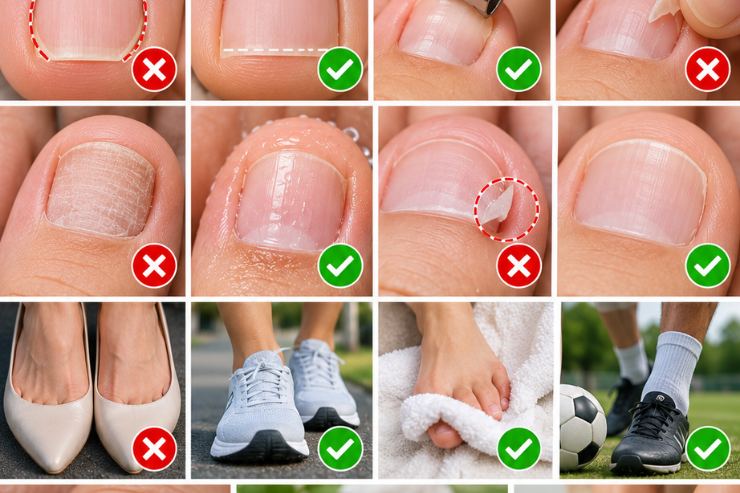
Mistake 1: Cutting Too Close to the Skin
Trimming below the nail's natural line removes its edge entirely.
- The skin around the toe can grow slightly over that shortened edge as the nail regrows.
- This is one of the most common root causes seen in everyday cases.
- It often feels harmless at the time, since there's no pain while cutting.
Mistake 2: Rounding the Corners, Not Cutting Straight
A curved cut leaves sharp corners tucked into the skin.
- As the nail grows forward, those curved edges get pushed downward instead of outward.
- Over time, this creates steady pressure against the surrounding skin.
- A straight-across cut avoids shaping the nail this way in the first place.
Mistake 3: Trimming Nails While They're Fully Dry
Dry nails are harder, more brittle, and harder to control.
- This often leads to splitting, jagged edges, or uneven cuts.
- A clean, even trim is far easier right after a bath or shower.
- Softer nails also mean less pressure needed to cut them properly.
Mistake 4: Picking or Tearing Instead of Clipping
A loose edge can be tempting to just pull off by hand.
- Tearing creates an unpredictable edge that often goes deeper than intended.
- A torn edge is far more likely to catch on skin as it grows back.
- Clipping, even a small bit at a time, keeps the edge more even.
Mistake 5: Leaving a Sharp Edge Behind
Even a careful cut can leave a tiny spike at the corner.
- That small spike is often what eventually pierces the skin, sometimes days later.
- It's easy to miss, since it's barely visible right after cutting.
- A quick, gentle file after clipping smooths out what clippers alone miss.
So, What's the Right Way to Trim?
Here's a quick comparison worth keeping in mind:
| Habit to Avoid | Better Alternative |
| Cutting too short | Trim level with the top of the toe |
| Rounded corners | Straight-across cut |
| Cutting when dry | Trim after a bath or shower |
| Picking or tearing | Clip gradually with clean clippers |
| Sharp leftover edges | File smooth after each cut |
| Using scissors or picking | Clean, sharp nail clippers |
A sharp, clean clipper also makes a real difference. Dull clippers tend to crush the nail edge rather than cut it cleanly, which can leave the same kind of rough, uneven edge that softer habits try to avoid.
Making even one or two of these changes can lower the chances of an ingrown nail developing. Everyone's nails and skin respond a little differently, so results can vary from person to person, but the technique itself is a simple, low-effort habit to adjust.
A Few More Habits Worth Knowing About
Trimming technique matters most, but a few other everyday habits play a supporting role too.
- Footwear with room at the front: shoes that are too tight or too narrow add pressure on the toes, which can make the nail grow into the skin more easily.
- Keeping feet dry: prolonged moisture, from sweat or damp socks, can soften the skin around the nail, making it more prone to irritation.
- Being mindful during sports: repeated pressure or impact on the toes, common in football or running, can gradually affect how a nail grows.
None of these guarantee prevention on their own, but together with correct trimming, they generally support healthier nail growth over time.
When a Small Mistake Has Already Caused Pain
Sometimes the trouble has already started before a habit gets noticed and corrected. A few signs worth paying attention to:
- Redness, swelling, or tenderness along one edge of the nail.
- Pain that gets worse with closed shoes or pressure.
- Any sign of pus, warmth, or discomfort lasting more than a few days.
If any of these sound familiar, it's worth having it examined rather than waiting it out, since early attention generally makes things easier to manage.
A Small Habit Worth Getting Right
Most ingrown toenails trace back to something as ordinary as how a nail was trimmed last week, not anything more serious. Adjusting a cutting habit is simple, costs nothing, and is entirely within your control. If pain or swelling has already set in despite good care, that's a different conversation, and one worth having with a qualified doctor rather than guessing at home.
Author:
Dr. Prashant Baranwal
- M.B.B.S., M.S., M. Ch
- Plastic & Cosmetic Surgeon
- Director, Banaras Plastic Surgery Hospital.
Frequently Asked Questions
1. Can an ingrown toenail heal on its own? Mild cases sometimes improve with proper soaking, gentle care, and correct trimming going forward. More persistent or painful cases usually need a proper examination, since home care alone may not fully resolve it.
2. Is cutting toenails too short really that harmful? Yes, it's one of the most common causes seen in practice. Removing too much of the nail's edge allows surrounding skin to grow over it as the nail regrows, increasing the chances of it becoming ingrown.
3. How often should toenails be trimmed to avoid this? There's no fixed rule, but trimming every few weeks, straight across and not too short, generally works well. Checking nails regularly for sharp edges also helps catch small issues early.
4. Are certain shoes more likely to cause this problem? Tight, narrow, or short shoes can add pressure on the toes, making ingrown nails more likely, especially alongside poor trimming habits. Properly fitted footwear is generally considered a helpful supporting habit.
5. When should an ingrown toenail be seen by a doctor? If there's persistent pain, swelling, redness, or any sign of pus, it's worth getting examined. Waiting too long can sometimes make the issue harder to manage, though this varies from person to person.
Disclaimer: This content is for general educational purposes only and does not constitute medical advice. Outcomes vary between individuals. Please consult your treating doctor for a personalised assessment before starting any treatment.