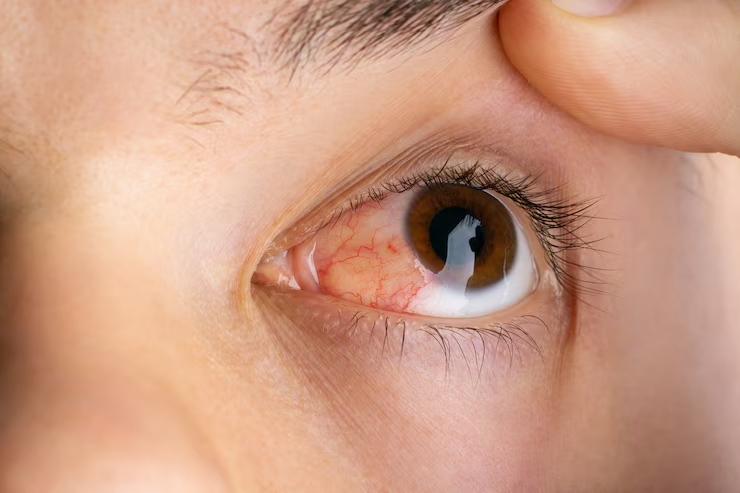
Cholesterol Deposit Around Eyes Removal in Varanasi

Don’t Like Those Stubborn Yellowish Bumps Near Your Eyelids?

Say Goodbye to Yellow Patches Around the Eyes! Those soft, pale-yellow patches might look harmless, but they can often be a sign of underlying lipid imbalance. These cholesterol deposits not only affect your appearance but may also indicate abnormal cholesterol levels in the blood. Fortunately, with professional care, these marks can be removed safely and effectively.

What Is Xanthelasma?

Cholesterol deposits around the eyes, medically known as Xanthelasma, refer to flat or slightly raised cholesterol-rich plaques that usually appear on the upper and lower eyelids, often near the inner corners. While they aren't harmful, they can expand over time and become a cosmetic concern. These deposits are more common in individuals with high cholesterol, liver disorders, or certain metabolic conditions, though they can also appear in people with normal lipid levels.

Common Signs of Cholesterol Deposits You Shouldn’t Ignore

Cholesterol deposits around the eyes may develop gradually, often without discomfort. However, specific signs may signal the need for medical attention.

  • Yellowish symmetrical lesions near the eyelids
  • Painless, non-itchy bumps
  • Gradual spreading and discoloration

These deposits may seem minor, but they often indicate deeper cholesterol issues. Getting them examined early ensures both aesthetic and health benefits.
Treatments for Cholesterol Deposits Around Eyes Removal

Modern treatments offer several ways to remove Xanthelasma with minimal discomfort and downtime. Each method is chosen based on the plaque’s size, location, and skin type. The goal remains the same—clearer skin and renewed confidence. Don’t let cholesterol deposits get heavy on your eyesight!

Types of Treatments for Cholesterol Deposits Removal:

1

Laser Therapy

Targets and breaks down plaque tissue precisely with minimal scarring.

2

Laser Therapy

Uses freezing temperatures to destroy the cholesterol build-up layer by layer.

3

Chemical Peels

Mild acids help exfoliate the affected skin and gradually fade smaller lesions.

4

Surgical Excision

Involves removing the plaque with a fine incision—suitable for larger or recurring deposits.

5

Radiofrequency Ablation

Controlled electrical energy helps remove deposits while promoting skin regeneration.

Why Patients Trust Us

Natural-Looking Results by Board-Certified Surgeon

Regular Follow-ups

Your journey doesn't end after surgery. We offer scheduled reviews to ensure seamless healing and consistent outcomes.

Professional Doctor

Global techniques and certified surgical excellence you can trust for every procedure.

Personalized Healthcare

Your treatment plan is uniquely crafted to match your goals, body, and expectations.

Patient Friendly

Healing happens best where you feel relaxed, respected, and completely at ease.

Got questions? We've got answers!

Cholesterol deposits, or xanthelasma, often form due to high LDL (bad cholesterol), low HDL (good cholesterol), or underlying lipid metabolism disorders. However, they can also appear in people with normal cholesterol levels.

Treatment removes existing deposits, but new ones may appear if cholesterol levels remain unmanaged. Regular lipid monitoring and a healthy lifestyle reduce the risk of recurrence.

Most advanced treatments, like laser therapy or radiofrequency ablation, leave minimal or no scarring. Surgical methods may leave faint lines, which usually fade over time with proper care.

Recovery depends on the method used. Non-invasive treatments like lasers require little to no downtime, while surgical excision may need a few days of healing and aftercare.

नहीं, यह अपने आप नहीं जाते। जीवनशैली सुधारने से नए डिपॉजिट बनने की संभावना कम हो सकती है, लेकिन पुराने डिपॉजिट हटाने के लिए मेडिकल या सर्जिकल ट्रीटमेंट ज़रूरी है।

लेज़र ट्रीटमेंट, सर्जिकल एक्सिशन और रेडियोफ्रीक्वेंसी तकनीक सबसे सामान्य और सुरक्षित विकल्प हैं। कौन-सा तरीका आपके लिए सही है, यह डॉक्टर आपकी स्किन और डिपॉजिट की गहराई देखकर तय करेंगे।

अगर शरीर में कोलेस्ट्रॉल स्तर नियंत्रित न हो तो डिपॉजिट दोबारा हो सकते हैं। इसलिए सर्जरी या लेज़र के साथ-साथ ब्लड लिपिड प्रोफ़ाइल की जांच और हेल्दी डाइट-लाइफस्टाइल भी ज़रूरी है।

आम तौर पर रिकवरी तेज़ होती है। हल्की लालिमा या सूजन कुछ दिनों में ठीक हो जाती है। ज़्यादातर लोग हफ़्ते भर में अपनी सामान्य दिनचर्या में लौट जाते हैं।

आंखों के पास पीले दाग़ या कोलेस्ट्रॉल डिपॉजिट (ज़ैंथेलाज्मा) सिर्फ दिखने में खराब नहीं लगते, बल्कि यह शरीर में हाई कोलेस्ट्रॉल या हृदय रोग के खतरे का संकेत भी हो सकते हैं।

Agar peela daag surgical method se remove kiya jaata hai, toh fine stitches lag sakte hain. Laser ya radiofrequency treatment mein kai baar stitches ki zaroorat nahi padti. Method daag ke size, depth aur location par depend karta hai.

Makeup sirf temporary cover karta hai. Agar aankh ke paas peela patch badh raha hai, dono taraf fail raha hai, ya face appearance ko affect kar raha hai, toh doctor se check karwana better hota hai.

Haan, cholesterol report normal hone ke baad bhi aankh ke paas peela daag remove kiya ja sakta hai. Visible patch ko cosmetic concern ke basis par laser, radiofrequency ya surgery se treat kiya ja sakta hai.

Aankh ke paas flat ya halka utha hua peela daag fatty deposit ho sakta hai, lekin exact reason doctor examination ke baad hi confirm hota hai. Kabhi-kabhi lipid profile ya cholesterol test bhi advise kiya ja sakta hai.

Proper technique se palak ka natural shape preserve karne ki कोशिश की जाती है. Treatment plan banate waqt doctor daag ka size, palak ki skin aur aankh ke paas ki delicate area ko ध्यान में रखते हैं.

Have any questions?