Burn scars don't just change how the skin looks. They can pull at joints, restrict movement, and stay tender or itchy for years after the wound itself has healed. One of the most common questions patients ask during a scar consultation is simple: should I go for laser treatment or surgery?
The honest answer is — it depends on the scar. Not every burn scar needs surgery, and not every scar responds well to laser alone. This guide breaks down how both options work, when each one is the right fit, and how a plastic surgeon actually decides between them.
Why Burn Scars Are Different From Other Scars
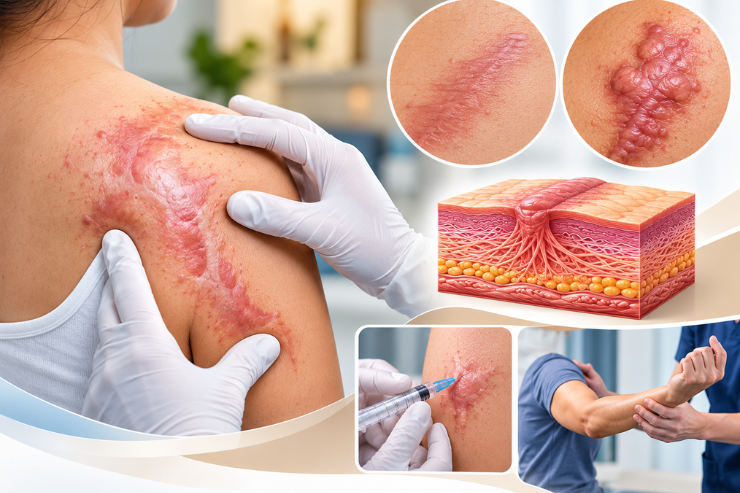
Burn scars behave differently from a cut or a surgical scar because burns damage skin in layers, not in a clean line.
- They often involve a larger surface area
- They can pull the skin tight as they heal, especially over joints
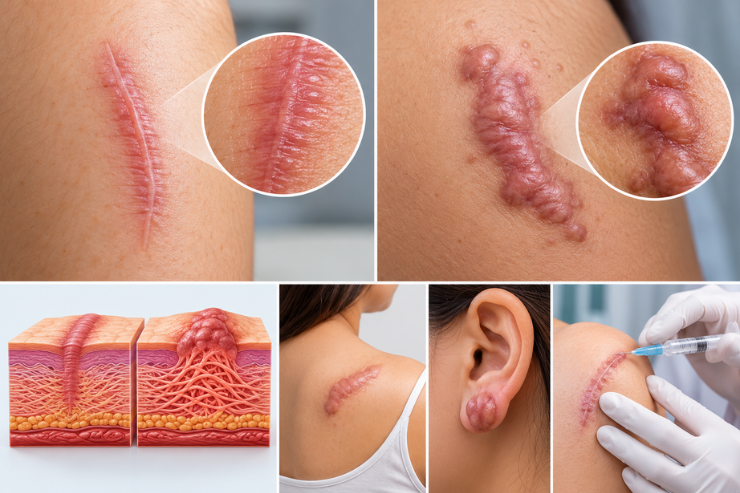
- They may thicken and rise above the skin (hypertrophic or keloid scars)
- They can restrict how far a joint bends or stretches (contractures)
- They change over 12–18 months as the skin continues to remodel
This is why burn scars are usually assessed differently from a scar left after a minor injury. Depth, location, and how the scar is behaving right now all matter more than how it looked six months ago — which is exactly why a proper evaluation by a burn surgery specialist matters more than guessing between treatments.
Understanding Laser Treatment for Burn Scars
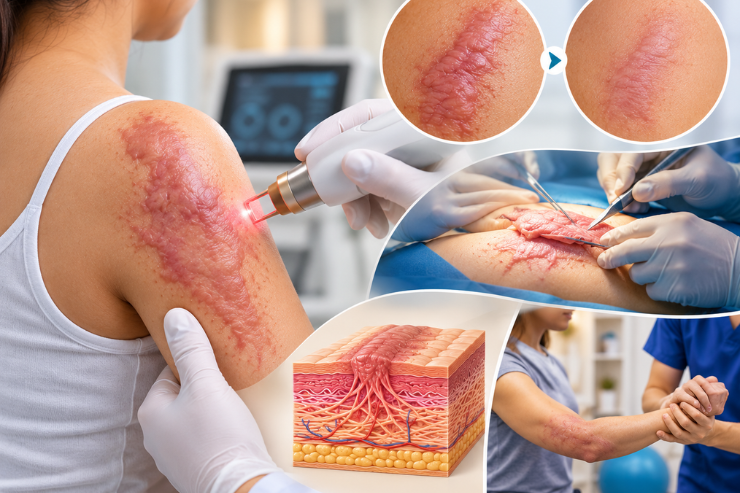
Laser treatment works on the surface and upper layers of the skin. It doesn't remove the scar — it encourages the skin to remodel itself, which softens texture, evens out colour, and improves flexibility over time.
How It Helps
- Reduces redness and discoloration
- Softens raised or thickened scar tissue
- Improves skin texture and flexibility
- Can ease itching and tightness in early scars
- Works well alongside other scar therapies
Types Commonly Used
- Fractional CO2 laser – resurfaces the skin and stimulates collagen remodeling
- Pulsed dye laser – targets redness and blood vessels in newer scars
- Fractional non-ablative lasers – gentler option for sensitive or larger areas
Best Suited For
- Flat to moderately raised scars
- Scars that are red, discoloured, or textured
- Scars that don't restrict movement
- Patients who want gradual improvement without downtime from surgery
Laser sessions are usually spaced weeks apart, and most patients need multiple sittings before seeing the full result. It's a process, not a one-time fix — and that's worth setting realistic expectations around from the start. Patients exploring plastic surgery in Varanasi often start here, since laser is the first, least invasive option worth ruling in or out.
Understanding Surgery for Burn Scars
Surgery is considered when the scar is doing more than affecting appearance — when it's affecting function.
When Surgery Becomes Necessary
- The scar has tightened and formed a contracture, limiting joint movement
- The scar is very thick, wide, or deeply attached to underlying tissue
- The scar pulls on the face, neck, hands, or other mobile areas
- Previous non-surgical treatments haven't improved function
- The scar affects how a joint or feature works, not just how it looks
Common Surgical Approaches
- Scar excision – removing the scarred tissue and closing the wound in a way that reduces tension
- Z-plasty or local flap techniques – repositioning skin to release tightness and improve movement
- Skin grafting – used when a large area of skin needs to be replaced
- Tissue expansion – gradually stretching nearby healthy skin before using it to cover the scarred area
Surgery is generally a more definitive step. It's not chosen instead of laser — it's chosen because the scar's structure genuinely needs correction, not just refinement. This is usually where a qualified plastic surgeon in Varanasi, or wherever the patient is based, steps in to map out the surgical plan in detail.
Laser vs Surgery: A Straightforward Comparison
| Factor | Laser Treatment | Surgery |
| Best for | Texture, colour, mild tightness | Contractures, deep or restrictive scars |
| Downtime | Minimal | Requires recovery time |
| Sessions needed | Multiple, spaced over months | Usually a single procedure, sometimes staged |
| Effect on movement | Improves flexibility gradually | Directly restores range of motion |
| Anaesthesia | Often topical or none | Local or general, depending on extent |
| Result timeline | Gradual, visible over months | More immediate structural change |
Neither option is universally "better." A scar that's flat but discoloured doesn't need surgery. A scar that's pulling a finger out of position won't fully resolve with a laser alone. The right path depends entirely on what the scar is actually doing to the skin and the joint underneath it.
How the Decision Is Actually Made
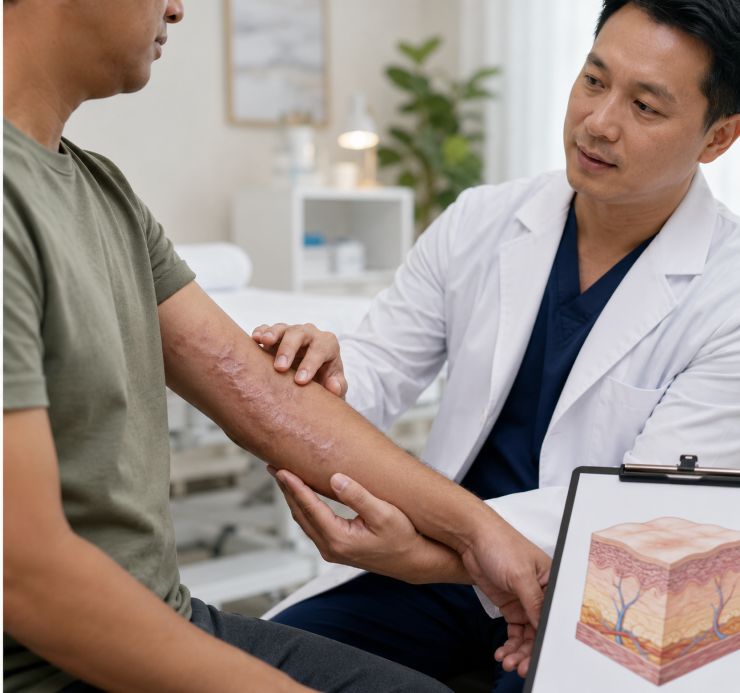
An experienced plastic surgeon, particularly one trained in burn reconstruction, looks at a few specific things before recommending a direction: this is typically the kind of case-by-case judgment call that a dedicated burn surgery specialist is trained to make, rather than something that fits a standard checklist.
Scar Maturity
Younger scars (under a year) are still evolving. Surgery is often delayed until the scar has matured, unless a contracture is actively limiting function and needs earlier intervention.
Location on the Body
Scars over joints — elbows, knees, neck, hands — are watched more closely because even mild tightening in these areas can restrict daily activity.
Depth of the Burn
Superficial scars usually respond well to laser. Deep or full-thickness burn scars often need surgical correction before a laser can meaningfully improve the result.
Functional Impact
This is often the deciding factor. If a scar limits how well someone can open their hand, turn their neck, or close their eyelid, function takes priority over appearance in treatment planning.
Combination Approach
It's common for both to be used together — surgery to release a contracture or remove problematic tissue, followed by laser sessions to refine colour and texture once the area has healed. This staged approach often gives the most complete result.
What to Expect From Either Path
After Laser Treatment
- Mild redness or swelling for a few days
- Sun protection is essential between sessions
- Results build gradually over several sittings
- Regular follow-up helps track progress
After Surgery
- Recovery time depends on the extent of the procedure
- Physiotherapy or splinting may be recommended for joint-area scars
- Scar care (silicone sheets, massage, sun protection) continues after healing
- Follow-up visits are used to monitor how the new scar settles
In both cases, scar treatment is rarely a single step. It's a plan built around how the skin responds, adjusted as healing progresses.
In Summary
Burn scars aren't one-size-fits-all, and neither is their treatment. Laser works well for scars that are affecting skin texture and colour without restricting movement. Surgery becomes necessary when a scar has tightened enough to limit function or when the tissue is too deep or extensive for non-surgical methods to correct. In many cases, the two approaches work best in sequence rather than in competition with each other.
Every burn scar tells a different story in how it healed, and the treatment plan should be built around that story specifically — not a generic template.
If a burn scar is affecting movement, comfort, or confidence, it's worth getting it evaluated by a qualified expert who can guide the right course of action.
Author:
Dr. Prashant Baranwal
M.B.B.S., M.S., M. Ch
Plastic & Cosmetic Surgeon
Director, Banaras Plastic Surgery Hospital.
Frequently Asked Questions
1. Can laser treatment completely remove a burn scar?
No treatment can make a burn scar disappear completely. Laser can significantly soften the scar's colour, texture, and flatten it over time, but some trace of the scar usually remains. The goal is visible improvement, not total erasure.
2. How do I know if my scar needs surgery instead of a laser?
A simple way to think about it: if the scar only bothers you visually, laser is often enough. If the scar is pulling on your skin, limiting how far you can move a joint, or feels tight when you stretch, that usually points toward surgery being necessary.
3. Is laser treatment painful?
Most people describe it as a warm, snapping sensation on the skin rather than sharp pain. Numbing cream is commonly applied before the session to keep it comfortable, especially on sensitive areas.
4. How long after a burn should I wait before starting scar treatment?
It depends on how the wound has healed. Once the skin has fully closed and there's no open wound or infection, scar treatment can often begin. Very early intervention (within the first few months) can sometimes prevent a scar from thickening as much, so it's worth getting the scar assessed early rather than waiting years.
5. Will the scar come back after surgery?
Surgery removes or releases the existing scarred tissue, but any new incision will also heal into a scar — ideally a flatter, less restrictive one. Proper aftercare, including scar massage and sun protection, plays a big role in how well the new scar settles.
This blog is intended for general informational and educational purposes only and should not be considered a substitute for professional medical advice, diagnosis, or treatment. Burn scar treatment outcomes vary from person to person based on individual skin type, scar depth, and overall health. Always consult a qualified and registered plastic surgeon for an accurate assessment and personalised treatment plan before making any healthcare decisions.