A large, unusual skin growth can be alarming, especially when it appears suddenly or keeps growing. Many people fear the worst. In reality, not every visible skin change is dangerous.
This blog explains a real case where a large ear scar was mistaken for cancer, but was clinically diagnosed as a hypertrophic scar and treated successfully. Understanding hypertrophic scar treatment helps patients make informed, calm decisions instead of living with unnecessary fear.
What Is a Hypertrophic Scar?
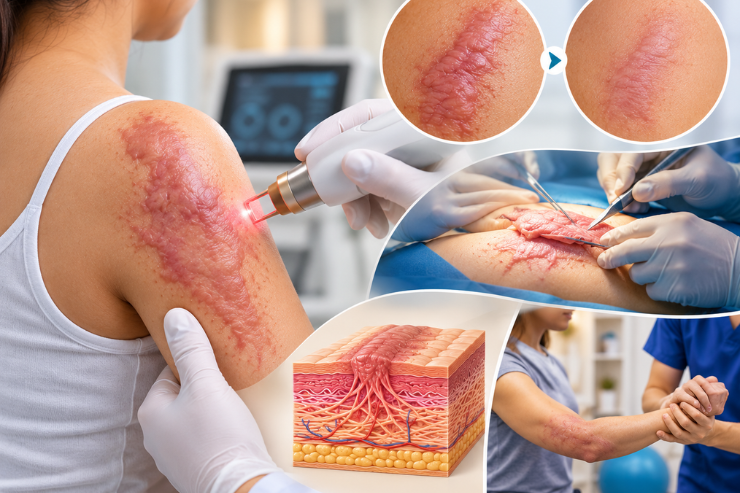
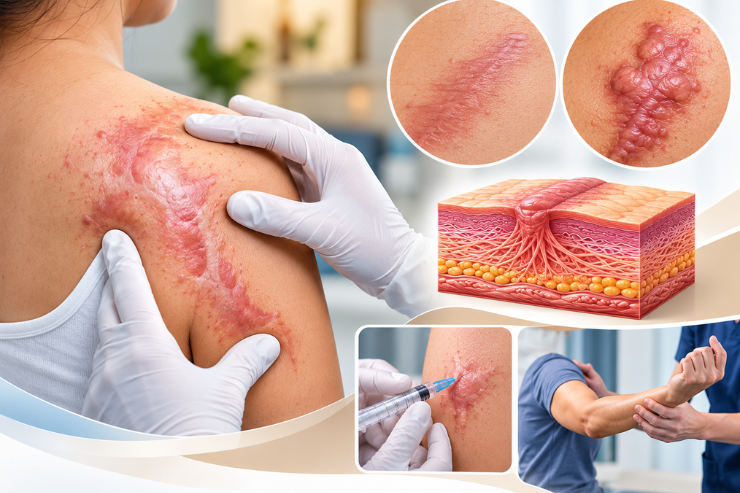
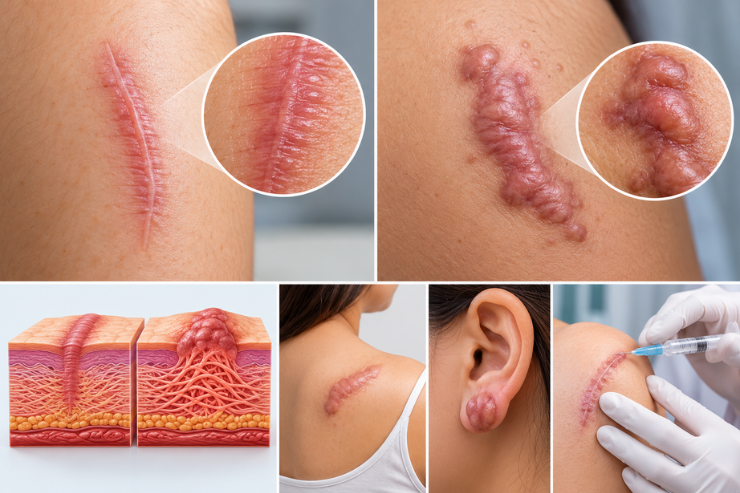
A hypertrophic scar is a thickened, raised scar that develops after skin injury, surgery, piercing, or trauma. It forms due to excess collagen production during healing.
Key features include:
- Raised but confined to the original wound
- Firm or thick texture
- May appear red or darker than the surrounding skin
- Does not spread to nearby healthy skin
Importantly, a hypertrophic scar is a non-cancerous skin growth. While it may look concerning, it does not behave like cancer.
Can a Hypertrophic Scar Look Like Cancer?
Yes. This is one of the main reasons patients become anxious.
Large hypertrophic scars, especially on visible areas like the ear, can:
- Grow over time
- Appear irregular or bulky
- Feel firm to the touch
- Cause discomfort or itching
These features can resemble more serious conditions. Without proper examination, people may assume malignancy. However, visual appearance alone is never enough to diagnose cancer.
Why Long-Term Medication May Not Reduce Certain Scars
Many patients try topical creams or alternative therapies first. While these may help early or mild scars, long-standing hypertrophic scars often respond poorly to medication alone.
Reasons include:
- Dense collagen buildup
- Reduced blood supply in scar tissue
- Structural skin changes over time
When a scar persists for years, procedural treatment is often required for meaningful improvement.
How Doctors Clinically Differentiate Scar vs Cancer
Differentiating a scar from cancer involves careful clinical evaluation, not assumptions.
Doctors assess:
- Growth pattern over time
- Surface texture and firmness
- Boundaries of the lesion
- Presence or absence of pain, bleeding, or ulceration
- Patient's history of injury or surgery
In many cases, experienced clinical examination is enough to identify a hypertrophic scar without aggressive testing.
When Is Cosmetic Surgery Recommended for Ear Scars?
Not all scars require surgery. However, scar removal surgery in Varanasi may be advised when:
- The scar is large or progressively growing
- There is functional discomfort
- Appearance causes emotional distress
- Conservative treatment has failed
- Diagnosis uncertainty causes anxiety
In such situations, cosmetic surgery offers both diagnostic clarity and physical relief.
Case Insight: Large Hypertrophic Scar on the Ear Pinna
A patient presented with a large, raised growth over the right ear pinna that had been present for nearly two years. During this time, the lesion had been treated with homeopathic medication, but there was no visible improvement.
As the growth continued to persist and enlarge, concerns began to grow. The patient was advised elsewhere that the lesion might be cancerous, which understandably caused significant anxiety and prompted referral for specialist evaluation.
On detailed clinical examination, the features of the lesion were carefully assessed. Its appearance, texture, and growth pattern were consistent with a hypertrophic scar, not a malignant or cancerous condition. Importantly, there were no clinical signs suggesting skin cancer or aggressive tissue involvement.
Given the size of the scar and the discomfort—both physical and emotional—it was decided that cosmetic surgical removal would be the most appropriate option. The procedure was planned with a focus on complete removal while preserving the natural shape of the ear.
The scar was successfully excised. Post-treatment, the patient experienced both physical relief and reassurance after learning that the growth was benign. The outcome highlighted not only the importance of accurate diagnosis but also how timely surgical intervention can prevent prolonged stress and unnecessary fear.
This case reinforces a key message: not all persistent or unusual skin growths are dangerous, but they do require proper medical evaluation to reach the right conclusion and avoid delayed or inappropriate treatment.
[Keep the before-after images of this patient here]
Hypertrophic Scar vs Keloid – Why Confusion Happens
People often confuse hypertrophic scars with keloids.
Scar vs keloid differences:
- Hypertrophic scar:
- Stays within wound boundaries
- May improve over time
- Stays within wound boundaries
- Keloid:
- Grows beyond the original wound
- More likely to recur
- Grows beyond the original wound
Understanding this distinction helps patients set realistic expectations for treatment.
Causes and Risk Factors of Hypertrophic Scars
Hypertrophic scars can develop due to:
- Surgical incisions
- Piercings, especially ear piercings
- Trauma or burns
- Infection during wound healing
Risk factors include:
- Prolonged wound healing
- Repeated irritation
- Genetic tendency
- Poor wound care
Symptoms That May Need Medical Evaluation
While hypertrophic scars are benign, evaluation is advised if you notice:
- Rapid increase in size
- Persistent itching or discomfort
- Bleeding or surface breakdown
- Emotional distress due to appearance
Early evaluation helps determine the right hypertrophic scar treatment approach.
Diagnosis and Treatment Options for Hypertrophic Scar Treatment
Diagnosis
Diagnosis is mainly clinical, based on examination and patient history. Imaging or biopsy is rarely required unless features are atypical.
Treatment Options
Depending on severity:
- Observation for mild scars
- Injections or laser therapy
- Scar removal surgery for large or persistent lesions
Treatment choice depends on scar size, location, and patient concerns.
Prognosis and Long-Term Outlook
Most hypertrophic scars:
- Do not turn cancerous
- Can be managed effectively
- Have good outcomes when treated properly
Surgical removal, when indicated, offers lasting relief when combined with appropriate follow-up care.
What Patients Should Learn From This Case
- Not all large scars are cancerous
- Visual appearance alone can be misleading
- Long-term, untreated scars may need procedural care
- Early professional evaluation reduces fear
- Correct diagnosis saves time and stress
When Clarity Matters More Than Assumptions
Large skin changes can create fear, especially when misunderstood. This case shows how proper evaluation transformed worry into reassurance.
At Banaras Plastic Surgery Hospital, patients receive careful assessment and evidence-based care, focusing on clarity and comfort rather than urgency.
If you’re uncertain about a scar or skin growth, book a consultation with us to get a clear, professional assessment and understand the right next steps for your skin
FAQs
No. A hypertrophic scar is a benign, non-cancerous skin growth. It stays limited to the original wound area and does not spread to surrounding healthy tissue.
No. Hypertrophic scars do not become cancerous. They may look alarming due to size or redness, but they have no malignant potential.
No. Surgery is recommended only when ear scars are large, persistent, painful, itchy, or causing cosmetic or functional concerns despite conservative treatment.
Yes. Itching is common, especially during the active growth phase. It usually reduces over time but may persist in thicker or long-standing scars.
Yes. When performed by an experienced specialist, scar removal surgery is generally safe, precise, and aimed at improving comfort and appearance with minimal risk.
Yes. Recurrence is possible, especially in high-tension areas like the ear. Proper technique, follow-up care, and scar management reduce this risk significantly.