Many people notice dark patches or uneven skin tone and assume it’s all the same. But not all pigmentation is alike. If you are exploring melasma treatment in Varanasi, understanding whether your concern is melasma, general pigmentation, or tanning can make a real difference.
Each condition has a different cause, behaves differently, and responds to treatment in its own way. Knowing this early helps you choose the right approach instead of trying multiple options without clarity.
What Is the Difference Between Melasma, Pigmentation, and Tanning?
These three terms are often used interchangeably, but they are not the same.
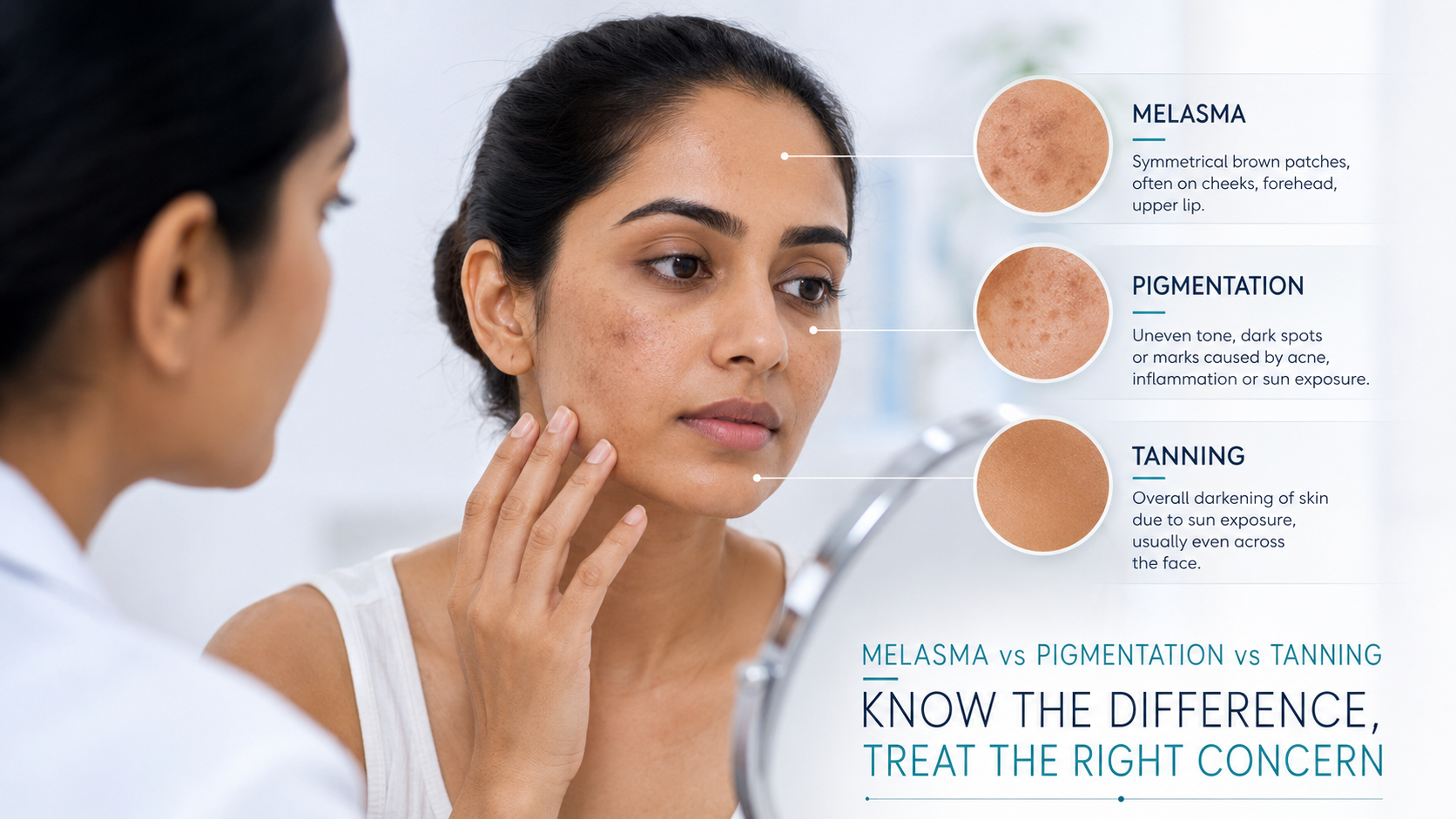
- Melasma: A specific type of pigmentation, often linked to hormones and sun exposure
- Pigmentation: A broader term that includes various forms of dark spots
- Tanning: A temporary darkening of skin due to sun exposure
Understanding this difference is the first step toward effective care.
What Is Melasma and How Does It Look?
Melasma appears as patchy, brown or greyish discoloration, usually on the face.
Common features:
- Symmetrical patches on cheeks, forehead, or upper lip
- Gradual development over time
- Can become more noticeable with sun exposure
Common triggers:
- Hormonal changes
- Sun exposure
- Heat and inflammation
In many cases, hormonal melasma treatment focuses on long-term care and gentle management rather than quick solutions.
What Is General Pigmentation on the Face?
Pigmentation is a broader term that includes different types of dark spots.
Common types:
- Sunspots
- Post-acne marks
- Age-related spots
Key characteristics:
- Can appear anywhere on the face
- May be uneven in shape and size
- Often linked to skin injury, sun, or aging
Unlike melasma, general pigmentation may respond more quickly to targeted treatments.
What Is Tanning and How Is It Different?
Tanning is the skin’s natural response to sun exposure.
Key signs:
- Overall darkening of exposed areas
- Even skin tone change rather than patches
- Improves gradually with sun protection
Sun-induced pigmentation, like tanning, is usually temporary and fades with proper care.
How Can You Tell If It’s Melasma or Just Tanning?
This is one of the most common questions.
Melasma:
- Patchy and uneven
- Symmetrical patterns
- Does not fade easily
Tanning:
- Even darkening
- Improves with time
- Linked directly to recent sun exposure
If the pigmentation remains unchanged despite basic care, it may need closer evaluation.
How Is Melasma Different from Other Pigmentation?
Melasma behaves differently from regular pigmentation.
| Feature | Melasma | General Pigmentation | Tanning |
| Cause | Hormonal + sun | Skin damage, acne, sun | Sun exposure |
| Pattern | Symmetrical | Random | Even |
| Duration | Long-term | Variable | Temporary |
| Response to treatment | Gradual | Faster | Improves naturally |
This comparison helps clarify why the same treatment does not work for all conditions.
Why Is It Important to Identify the Right Condition Before Treatment?
Many people begin treatment without knowing the exact cause. This can lead to slow or inconsistent results.
Here’s why correct identification matters:
- Prevents unnecessary treatments
- Helps choose the right approach
- Improves long-term results
- Reduces chances of recurrence
Understanding your condition is the foundation of effective care.
What Treatment Approach Works for Each Condition?
Each type of pigmentation requires a different approach.
For Melasma:
- Long-term management
- Gentle skincare
- Avoiding triggers like heat and sun
For General Pigmentation:
- Targeted treatments
- Consistent skincare routine
- Faster visible improvement in many cases
For Tanning:
- Sun protection
- Hydration and basic care
- Gradual natural fading
Choosing the best treatment for melasma in India depends on accurate diagnosis and a personalized plan.
Can Melasma, Pigmentation, and Tanning Be Managed Together?
Yes, but with a careful approach.
In some cases, people may have:
- Melasma, along with tanning
- Pigmentation with sun damage
This requires:
- Layered treatment planning
- Balanced skincare
- Regular follow-up
A personalized approach ensures each concern is addressed correctly.
How to Prevent Pigmentation from Getting Worse?
Daily habits play a key role in maintaining results.
- Use sunscreen regularly
- Avoid excessive sun exposure
- Follow a gentle skincare routine
- Avoid overuse of strong products
- Stay consistent with care
These small steps help protect the skin and maintain improvement over time.
The Right Understanding Makes Treatment Simpler
Not all dark patches are the same, and treating them as one can lead to confusion. Understanding whether you are dealing with melasma, general pigmentation, or tanning helps you choose the right path from the start.
If you are unsure about your skin concern or want clarity before starting treatment, you can book a consultation at Banaras Plastic Surgery Hospital with Dr. Prashant Baranwal. With a personalized approach to melasma treatment in Varanasi, you can receive guidance that is tailored to your skin’s specific needs.
FAQs
How do I know if I have melasma or pigmentation?
Melasma usually appears as symmetrical patches, while general pigmentation is more random. A proper assessment helps identify the exact condition and guide the right treatment approach.
Can tanning turn into melasma?
Tanning itself does not turn into melasma, but repeated sun exposure can trigger or worsen melasma in people who are prone to it.
What is the best treatment for melasma in India?
The best treatment depends on the type and depth of melasma. A personalized approach combining care and maintenance usually gives the most stable results.
Does melasma go away with creams alone?
Melasma may improve with creams, but long-term management is often needed. Identifying triggers and following consistent care is equally important.Is sun-induced pigmentation permanent?
Most sun-induced pigmentation, like tanning, is temporary and improves with protection and care. However, repeated exposure can make it more persistent over time.