Melasma is more than just a surface concern - it often reflects what’s happening beneath the skin. Many people try different creams without clear improvement, simply because the underlying cause is not identified. If you are exploring melasma treatment in Varanasi, understanding whether your pigmentation is hormonal or linked to sun exposure can make a meaningful difference.
This simple clarity helps guide the right treatment approach and supports more consistent, long-term results.
What Are the Main Causes of Melasma on Face?
Melasma does not have a single cause. It usually develops due to a combination of internal and external factors.
Here are the most common causes of melasma on face:
- Sun exposure (UV rays): The biggest trigger in most cases
- Hormonal changes: Pregnancy, thyroid issues, or hormonal imbalance
- Genetics: Family history can increase the risk
- Heat and inflammation: Excess heat can worsen pigmentation
- Skincare irritation: Overuse of strong products can trigger melasma
Understanding these triggers helps guide the right treatment approach.
What Is Hormonal Melasma and How Is It Different?
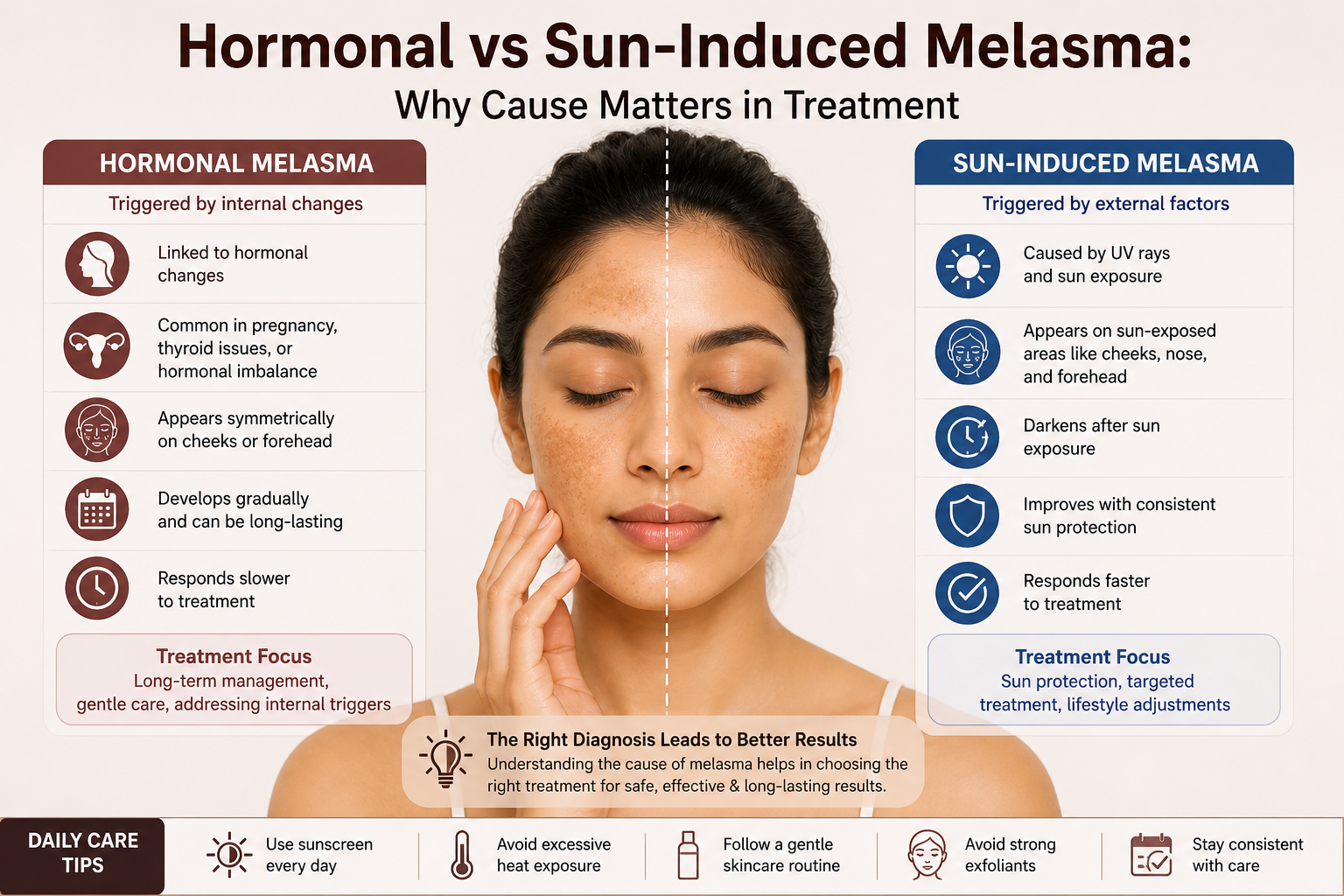
Hormonal melasma is linked to changes inside the body. It is often more persistent and may not respond quickly to surface treatments alone.
Common features:
- Appears symmetrically on both cheeks or forehead
- Develops gradually
- Can be long-lasting
Common triggers:
- Pregnancy
- Birth control pills
- Hormonal imbalance
In such cases, hormonal melasma treatment focuses on gentle care and long-term management rather than quick fixes.
What Is Sun-Induced Pigmentation (UV Melasma)?
Sun-induced melasma develops mainly due to repeated sun exposure. It is often easier to manage when proper protection is followed.
Key signs:
- Appears on sun-exposed areas like cheeks, nose, and forehead
- Darkens after spending time outdoors
- Improves with consistent sun protection
This type of sun induced pigmentation is highly influenced by daily habits, especially sunscreen use.
Hormonal vs Sun-Induced Melasma: What’s the Real Difference?
Understanding the difference helps you avoid ineffective treatments.
| Factor | Hormonal Melasma | Sun-Induced Melasma |
| Cause | Internal (hormones) | External (sun exposure) |
| Pattern | Symmetrical | Irregular |
| Trigger | Hormonal changes | UV rays |
| Response to treatment | Slower | Faster |
| Recurrence risk | Higher | Moderate |
This comparison shows why a one-size-fits-all treatment does not work for everyone.
Why Does the Same Melasma Treatment Not Work for Everyone?
Many people feel disappointed when treatments fail. The reason is often simple - the root cause is not addressed.
Here’s why results vary:
- Hormonal melasma needs internal balance
- Sun-induced pigmentation responds to external care
- Skin sensitivity differs from person to person
- Depth of pigmentation varies
Melasma is not just a surface issue. Treating it requires understanding what is happening beneath the skin.
How Do Doctors Decide the Right Melasma Treatment in Varanasi?
Choosing the right treatment involves careful evaluation.
Doctors usually consider:
- Type of melasma (hormonal or sun-related)
- Depth of pigmentation
- Skin type and sensitivity
- Lifestyle and sun exposure habits
This personalized approach ensures that treatment is safe, gradual, and suitable for each individual.
What Treatment Approach Works for Each Type of Melasma?
The treatment plan depends on the underlying cause.
For Hormonal Melasma:
- Focus on long-term control
- Gentle, consistent skincare
- Avoiding triggers like heat and irritation
For Sun-Induced Melasma:
- Daily sun protection is essential
- Targeted treatments may show faster results
- Lifestyle adjustments improve outcomes
The goal is not just improvement, but maintaining results over time.
Can Melasma Be Completely Cured or Only Managed?
This is one of the most common questions.
Melasma can be effectively managed, but it may not always disappear permanently.
Important points to understand:
- It can improve significantly with the right care
- Recurrence is possible if triggers return
- Maintenance plays a key role
With a consistent approach, most people can achieve visible and stable improvement.
How to Prevent Melasma from Getting Worse?
Daily habits make a big difference in controlling melasma.
Here are simple steps that help:
- Use sunscreen every day, even indoors
- Avoid excessive heat exposure
- Follow a gentle skincare routine
- Do not overuse strong exfoliating products
- Stay consistent with care
Managing melasma triggers is just as important as treatment itself.
Why Understanding Your Melasma Type Matters
Many people focus only on treatments without understanding the cause. This often leads to frustration.
When you know whether your melasma is hormonal or sun-induced:
- You set realistic expectations
- You avoid unnecessary treatments
- You follow a more effective plan
This clarity makes the entire treatment journey smoother and more predictable.
The Right Diagnosis Leads to Better Results
Melasma is not the same for everyone, and that is why treatment outcomes can vary. Understanding whether your pigmentation is hormonal or sun-induced is the first step toward managing it effectively with the right approach.
If you are unsure about your melasma type or feel your current plan is not giving the expected results, you can book a consultation at Banaras Plastic Surgery Hospital. With a personalized approach to melasma treatment in Varanasi, you can receive clear guidance and a treatment plan that suits your skin’s specific needs.
FAQs
What is the main cause of melasma on the face?
Melasma is caused by a mix of factors like sun exposure, hormonal changes, genetics, and heat. Identifying the main trigger helps guide the right melasma treatment approach.
How do I know if my melasma is hormonal?
Hormonal melasma often appears symmetrically on both cheeks or forehead and may be linked to pregnancy or hormonal imbalance. A professional evaluation helps confirm the exact cause.
Can sun exposure worsen melasma?
Yes. Sun exposure is a major trigger. Even short periods without protection can darken pigmentation, making sun induced pigmentation harder to control over time.
What is the best treatment for hormonal melasma?
Hormonal melasma treatment focuses on gentle, long-term care and managing internal triggers. Results improve gradually with consistent and personalized treatment plans.
Why is my melasma not improving with creams?
If the root cause is not addressed, creams alone may not work. Understanding whether it is hormonal or sun-related helps choose a more effective treatment strategy.