Vitiligo can feel confusing when white patches stay the same despite creams, medicines, or routine care. CO2 laser treatment for vitiligo is an advanced option when the patches are stable but not improving.
This treatment does not work like a simple cosmetic laser. It is usually considered for selected cases where the skin needs extra support for repigmentation. The goal is to help the skin respond better to other vitiligo treatments, such as topical medicines or light-based therapy.
At Banaras Plastic Surgery Hospital, the focus is always on proper skin assessment, realistic expectations, and safe treatment planning.
What Is CO2 Laser Treatment for Vitiligo?
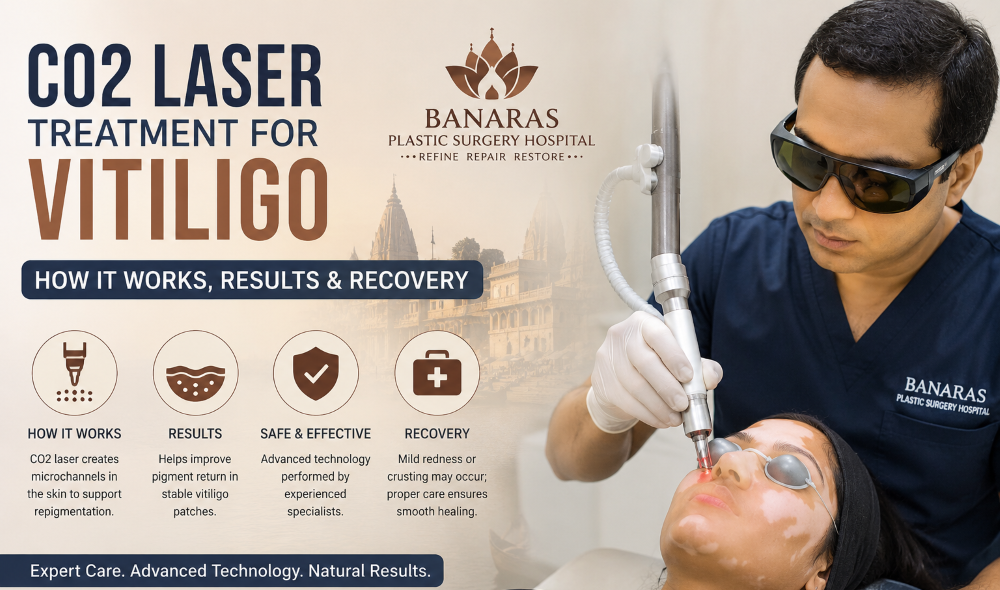
CO2 laser treatment for vitiligo uses focused laser energy on selected white patches. In most cases, top cosmetic surgeons in Varanasi use a fractional CO2 laser to treat stable vitiligo.
However, one must note the laser does not treat the entire skin surface at once. Instead, it creates tiny controlled zones in the skin.
In simple words, fractional CO2 laser for vitiligo helps “prepare” the patch so that other treatments can work more effectively.
It is important to understand one thing clearly. CO2 laser is not a magic cure for vitiligo. It is usually used as a supportive treatment in carefully selected cases.
How Does Fractional CO2 Laser for Vitiligo Work?
Vitiligo happens when the skin loses pigment-producing cells or when these cells stop working properly. This leads to white patches on the skin.
Fractional CO2 laser may help in three main ways:
- It creates tiny controlled openings in the skin.
- It may improve the absorption of topical medicines.
- It may support the skin’s natural healing and repigmentation process.
After treatment, the doctor may suggest topical medicines, phototherapy, or other supportive care depending on the patient’s condition.
This is why CO2 laser is often discussed as part of advanced vitiligo treatment, not as a standalone solution.
Who Can Consider CO2 Laser Treatment for Vitiligo?
CO2 laser may be considered for people with selected vitiligo patches. It is usually more suitable when the condition is stable.
A doctor may consider this option if:
- The vitiligo patch has not changed or spread recently.
- The patch is not responding well to regular treatment.
- The patient has localized patches.
- The skin is healthy enough for laser treatment.
- The patient understands that results take time.
CO2 laser for stable vitiligo is often discussed because active or spreading vitiligo usually needs disease-control treatment first.
If the patches are increasing quickly, changing shape, or appearing in new areas, your doctor may first focus on controlling the activity of vitiligo before suggesting laser-based treatment.
Which Vitiligo Patches Respond Better to CO2 Laser Treatment in Varanasi?
Vitiligo treatment results vary from person to person. Some areas respond better than others.
In general, facial patches may respond better than patches on the hands, feet, fingers, toes, elbows, and knees. These resistant areas often need more time and a combination approach.
Response may depend on:
- How long the patch has been present
- Whether vitiligo is stable or active
- Location of the patch
- Skin type
- Previous treatments used
- Follow-up consistency
- Combination treatment planned by the doctor
A good treatment plan does not only focus on the laser. It also considers the patient’s full vitiligo history.
What Happens During CO2 Laser Treatment for Vitiligo?
Many patients feel nervous before a laser session. Knowing the steps can make the treatment feel easier and less stressful.
1. Skin Assessment
The doctor first checks the patch carefully. They may ask:
- When did the patch first appear?
- Has it increased recently?
- Did previous treatments help?
- Is there any itching, redness, or irritation?
- Is there a family history of vitiligo?
This helps decide whether the patient is suitable for vitiligo laser treatment.
2. Treatment Planning
The doctor decides the treatment area, laser settings, number of sessions, and supportive care. In many cases, CO2 laser may be combined with topical medicines or light-based treatment.
The plan is different for every patient.
3. Laser Session
During the session, the laser is applied only to selected white patches. The patient may feel warmth, mild pricking, or slight discomfort.
In some cases, a numbing cream may be applied before the procedure to make the session more comfortable.
4. Post-Treatment Care
After the session, the skin may look red or slightly sensitive. The doctor may suggest soothing creams, sun protection, and simple aftercare steps.
Patients should avoid rubbing, scratching, or applying harsh products on the treated area.
5. Follow-Up Sessions
Vitiligo repigmentation is gradual. One session is usually not enough. The doctor reviews the response and plans further sessions if needed.
What Results Can You Expect from CO2 Laser for Vitiligo?
Results from CO2 laser are not instant. Repigmentation can take time.
Some patients may notice small dots of color appearing inside the patch. In others, color may start spreading from the edges. This is usually a gradual process.
Expected results may include:
- Slow return of pigment in selected areas
- Better response when combined with other treatment
- Improvement in resistant patches in some cases
- More visible results over multiple sessions
However, results can vary. Some patches may respond well, while others may show limited change.
A balanced approach is important. CO2 laser can support repigmentation, but it cannot guarantee complete or permanent color return in every case.
Is CO2 Laser Treatment Painful?
Most patients describe the discomfort as manageable. The feeling may be like mild heat, pricking, or a short stinging sensation.
Pain level depends on:
- Treatment area
- Laser settings
- Skin sensitivity
- Size of the patch
- Use of numbing cream
Sensitive areas may feel slightly more uncomfortable. Your doctor can guide you on what to expect before the session.
What Is the CO2 Laser Recovery Time for Vitiligo?
CO2 laser recovery time is usually manageable when aftercare is followed properly.
After treatment, the skin may show:
- Mild redness
- Warmth or burning sensation
- Slight swelling
- Dryness
- Temporary crusting
- Skin sensitivity for a few days
These changes are usually part of the healing process. The treated area should be protected and cared for as advised.
Patients should avoid harsh skincare, direct sun exposure, peeling the skin, or applying home remedies without medical advice.
Normal Healing vs Warning Signs After CO2 Laser
A little redness, dryness, or mild crusting can be normal after fractional CO2 laser. These signs often settle with proper care.
But some symptoms need medical attention.
Contact your doctor if you notice:
- Severe pain
- Pus or discharge
- Increasing redness
- Unusual swelling
- Fever
- Bleeding
- Skin darkening that keeps worsening
- Signs of infection
This comparison is important. Not every post-laser change is dangerous, but some signs should not be ignored.
Are There Any Side Effects of CO2 Laser for Vitiligo?
Like any laser procedure, CO2 laser may have side effects. Most are temporary when treatment is done carefully, and aftercare is followed.
Possible side effects include:
- Redness
- Burning or stinging
- Temporary darkening of skin
- Crusting
- Itching
- Dryness
- Infection if aftercare is poor
- Pigment changes
- Rare scarring
The risk may be higher if the laser is done without proper assessment or if the patient does not follow recovery instructions.
This is why laser treatment should be performed only by trained professionals using a suitable treatment plan.
CO2 Laser vs Other Vitiligo Treatments: What Is the Difference?
Patients often compare CO2 laser with other vitiligo treatments. Each option has a different role.
| Treatment Option | Common Use | Key Point |
| Topical medicines | Early or limited patches | Often used to control inflammation and support pigment return |
| Phototherapy | Wider or selected patches | Works slowly over repeated sessions |
| Excimer laser | Localized patches | Targets specific areas with light |
| CO2 laser | Stable or resistant patches | Often used to improve treatment response |
| Surgical options | Stable vitiligo in selected cases | Considered when non-surgical options are limited |
CO2 laser is not always “better” than other options. It may be useful when the doctor feels the patch needs additional support.
The right choice depends on the type of vitiligo, stability, area involved, and previous treatment response.
How Many CO2 Laser Sessions Are Needed for Vitiligo?
There is no fixed number of sessions for every patient.
Some people may need a few sessions. Others may need more. The doctor may also combine laser with medicines or phototherapy to improve response.
The number of sessions depends on:
- Size of the patch
- Location of the patch
- Skin healing
- Treatment response
- Stability of vitiligo
- Patient comfort
- Doctor’s treatment protocol
It is better to think of vitiligo treatment as a journey, not a one-time procedure.
How to Care for Skin After CO2 Laser Treatment
Aftercare plays an important role in recovery and results. Simple steps can help reduce irritation and support healing.
Follow these care tips:
- Keep the treated area clean.
- Use only prescribed creams or ointments.
- Avoid scratching or picking the skin.
- Do not peel crusts forcefully.
- Avoid harsh scrubs or exfoliants.
- Protect the area from strong sunlight.
- Do not apply home remedies.
- Attend follow-up visits as advised.
- Inform the doctor if healing feels unusual.
Good aftercare can make the recovery smoother and safer.
Can CO2 Laser Cure Vitiligo Permanently?
CO2 laser does not cure the root cause of vitiligo. Vitiligo is a complex skin condition. It may involve immune activity, skin response, and pigment cell function.
CO2 laser may help selected patches respond better to treatment, but it cannot promise that vitiligo will never return or spread.
This is why treatment planning often includes:
- Disease stability assessment
- Skin care guidance
- Medical treatment if needed
- Follow-up monitoring
- Sun protection
- Long-term care advice
A clear and honest discussion with the doctor helps patients understand what is possible.
Proper Diagnosis Matters Before Vitiligo Laser Treatment
Not every white patch is vitiligo. Some white or light patches may happen due to fungal infection, post-injury marks, eczema-related changes, or other skin conditions.
This is why diagnosis matters before starting laser care.
A doctor may check:
- Patch pattern
- Skin texture
- Medical history
- Spread or stability
- Previous treatments
- Associated symptoms
Starting laser without confirming the diagnosis may delay the right treatment.
When Should You See a Specialist Plastic Surgeon for Vitiligo?
You should consider seeing a specialist if:
- White patches are spreading.
- Patches are stable but not improving.
- You are unsure whether it is vitiligo.
- Previous treatments have not helped.
- You want to understand laser or advanced options.
- The patches are affecting your confidence.
- You want safe guidance before trying any procedure.
Early clarity can help avoid confusion and unnecessary treatment.
CO2 Laser Treatment for Vitiligo at Banaras Plastic Surgery Hospital
At Banaras Plastic Surgery Hospital, CO2 laser treatment is considered only after proper evaluation. The aim is not to offer one standard solution to every patient (As There is NO Any). The aim is to understand the skin, the patch, and the patient’s treatment journey.
The care approach focuses on:
- Careful assessment of vitiligo stability
- Suitability for laser treatment
- Safe treatment planning
- Realistic result discussion
- Recovery guidance
- Follow-up support
For many patients, the most helpful first step is not starting treatment immediately. It is understanding whether their patch is stable, whether laser is suitable, and what results can be expected.
CO2 laser treatment for vitiligo can be a useful option for selected patients, especially when patches are stable or resistant to routine care. It may help the skin respond better to medicines or other repigmentation treatments.
If you are unsure whether CO2 laser treatment is suitable for your vitiligo patches, a consultation with our board-certified Plastic Surgeon in Varanasi, Dr. Prashant Baranwal, can help you get clear answers.
FAQs About CO2 Laser Treatment for Vitiligo
1. Is CO2 laser treatment good for vitiligo?
CO2 laser treatment may help selected vitiligo patches, especially stable or resistant patches. It is often used with other treatments to support repigmentation. A doctor must assess whether it is suitable for your skin.
2. How does CO2 laser help in vitiligo?
Fractional CO2 laser creates tiny controlled channels in the skin. These may help improve the effect of topical medicines or other treatment support. It may also support the skin’s healing and repigmentation response.
3. Is CO2 laser safe for stable vitiligo?
CO2 laser for stable vitiligo may be safe when done after proper assessment by a trained specialist. It may not be suitable for active, spreading vitiligo or skin with infection, irritation, or poor healing tendency.
4. How long does recovery take after CO2 laser for vitiligo?
CO2 laser recovery time can vary. Mild redness, warmth, dryness, or crusting may last for a few days. Healing depends on the treated area, laser settings, skin type, and aftercare.
5. Can vitiligo come back after CO2 laser treatment?
Vitiligo can return or spread in some cases because CO2 laser does not cure the underlying cause. The treatment may support repigmentation in selected patches, but long-term monitoring and medical guidance are important.