A burn injury rarely ends when the wound closes. For many patients, the lasting effects may become more noticeable afterward. Tight scars can restrict movement. Skin patches may not regain their original colour or texture. Some areas can develop visible deformities that affect how a body part looks and functions. Those living with an old burn often have one important question: can it still be treated?
Why Old Burn Scars Appear Permanent
Burn scars can change over time. In some cases, scar tissue may thicken or tighten as it matures. Near a joint such as the elbow, knee, or fingers, this tightening can restrict normal movement. Because of this, many patients assume that once a scar has fully formed, it cannot be changed.
However, even mature scars may be evaluated for treatment years after the original injury. Depending on the type, location, severity, and effect of the scar, reconstructive plastic surgery may be one of the treatment options considered.
How Skin Changes After a Burn Injury
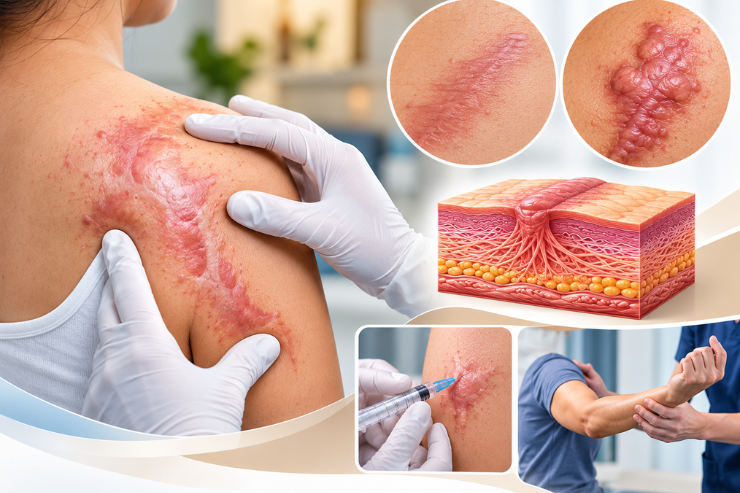
A deep burn may heal through the formation of scar tissue rather than regeneration of skin with the same characteristics as before the injury. Scar tissue can differ from surrounding healthy skin in several ways:
- It may be less elastic and flexible
- It can contract over time and pull on nearby tissue
- It may differ in pigmentation, texture, or hair growth
- It may limit movement when it forms across a joint or skin fold
These changes explain why some old burn scars can continue to affect movement, comfort, or appearance even years after the original injury.
Can Plastic Surgery Correct Old Burn Deformities?
Reconstructive plastic surgery may be considered for some of the long-term effects of burns. The purpose of treatment can include improving movement, reducing functional restriction, addressing discomfort, or improving the appearance of scarred areas.
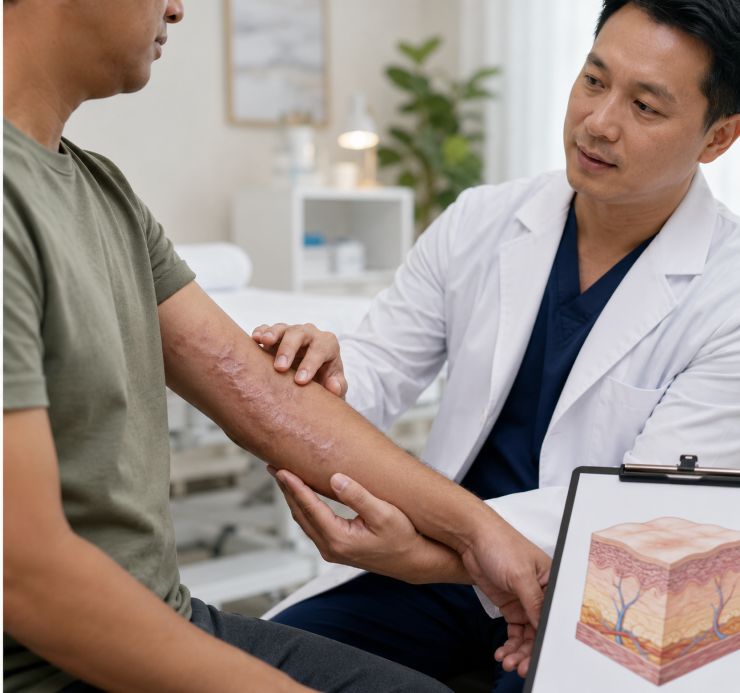
Before recommending treatment, a plastic surgeon generally assesses:
- How much the scar restricts movement or daily function
- The depth and extent of the scar tissue
- The location and characteristics of the affected area
- Whether underlying skin, muscle, tendons, joints, or other tissue layers are involved
- The patient's overall health and suitability for a particular procedure
These findings help determine an individual treatment plan. Burn scars vary significantly from one patient to another, so no single approach is appropriate for every case.
Treatment Methods Used to Correct Burn Deformities
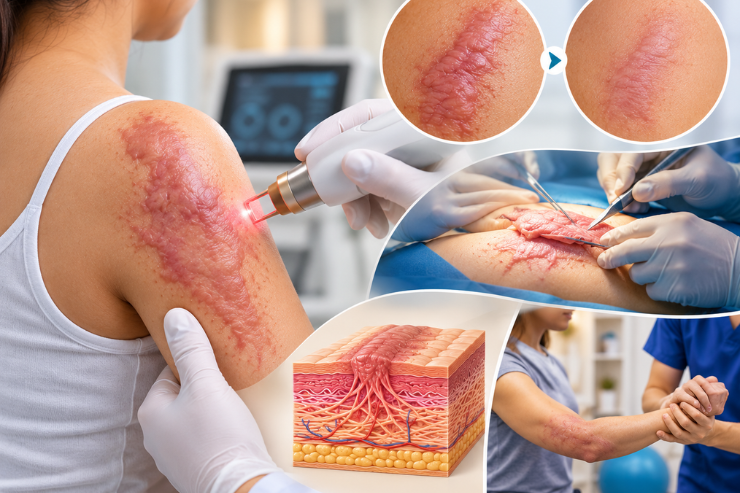
Several reconstructive techniques may be considered for burn-related scars and deformities. The appropriate method depends on factors such as the severity, depth, location, surrounding tissue, and functional effect of the scar. Treatment options can include:
- Scar revision surgery — May involve reshaping or removing selected scar tissue to improve contour, texture, or appearance.
- Contracture release — Releases tight bands of scar tissue that restrict movement. Depending on the resulting skin defect, additional reconstruction such as skin grafting or flap coverage may be required.
- Skin grafting — Uses skin taken from another part of the patient's body to cover an area where additional skin coverage is required.
- Flap surgery — Uses tissue with its own blood supply to reconstruct areas where more substantial tissue coverage may be needed.
- Tissue expansion — Gradually stretches suitable nearby skin, which may later be used to reconstruct a scarred area in selected cases.
- Laser-assisted scar therapy — Certain laser treatments may be considered to address specific scar characteristics such as texture, redness, or thickness in appropriately selected patients.
One or more techniques may be used depending on the individual clinical situation.
Is It Ever Too Late to Treat an Old Burn Scar?
The age of a scar is only one of several factors considered when assessing treatment options.
Burn scars from childhood injuries, accidents, or injuries that occurred many years earlier may still be evaluated for reconstructive treatment. Mature scars have generally stabilised, which can help a surgeon assess their extent and functional impact.
However, whether treatment is suitable, what procedure may be appropriate, and the degree of improvement that may be achievable depend on the individual scar, surrounding tissues, overall health, functional requirements, and other clinical factors.
An assessment by an appropriately qualified plastic surgeon can help determine the available options in an individual case.
What to Expect During Recovery
Recovery varies considerably depending on the type and extent of the procedure. Smaller scar revisions and more extensive procedures involving grafts, flaps, joints, or multiple areas can have different recovery requirements.
In general:
- Initial wound healing occurs during the early recovery period, with the duration depending on the procedure
- Swelling, discomfort, and tightness may reduce gradually as healing progresses
- Scar maturation and changes in appearance can continue for several months
- Additional treatment or rehabilitation may be recommended depending on the procedure and the individual response to healing
Patients may also be advised to follow a structured aftercare and rehabilitation plan. Depending on the case, this can include movement exercises, physiotherapy, splinting, pressure garments, dressings, or scar-care measures.
The treating surgeon and rehabilitation team can provide guidance based on the specific procedure performed.
Choosing the Right Specialist Matters
Burn reconstruction is not a standardised, one-size-fits-all procedure. Assessment and treatment may require experience in reconstructive surgery, particularly when scars involve joints, the face, hands, or other functionally important areas.
When considering treatment for an old burn deformity, patients may wish to consider:
- The medical practitioner's recognised qualifications and registration
- Relevant training and clinical experience in reconstructive procedures
- Whether the proposed treatment addresses both functional and reconstructive requirements
- A clear explanation of the available treatment options, limitations, risks, and alternatives
- Realistic expectations regarding the possible outcome
- The rehabilitation and follow-up that may be required after treatment
Treatment decisions should be based on an individual clinical assessment rather than on general information alone.
Old Scars, New Possibilities
An old burn scar does not necessarily mean that treatment options are unavailable. Depending on the type and extent of the deformity, reconstructive procedures may be considered even many years after the original injury.
The aim and likely outcome of treatment vary from person to person. An appropriate clinical evaluation can help determine whether treatment is indicated, which options may be suitable, and what limitations or risks should be considered.
Banaras Plastic Surgery Hospital provides facilities for the assessment and management of plastic and reconstructive surgery conditions, including burn-related scars and deformities. Treatment recommendations are made following individual clinical evaluation and depend on the patient's condition and suitability for the proposed procedure.
Author:
Dr. Prashant Baranwal
M.B.B.S., M.S., M. Ch
Plastic & Cosmetic Surgeon
Director, Banaras Plastic Surgery Hospital.
Frequently Asked Questions
1. Can a burn scar from childhood still be treated as an adult?
Possibly. The age of the scar does not by itself determine whether treatment is suitable. The location, type and extent of scar tissue, its effect on movement or function, surrounding tissues, and the person's overall health are among the factors considered during assessment.
2. Does burn scar correction surgery hurt a lot?
Surgical procedures are performed using an appropriate form of anaesthesia depending on the procedure and individual case. Some discomfort, soreness, swelling, or tightness may occur during recovery. The treating medical team can advise on appropriate pain management and postoperative care.
3. Will the burn scar disappear completely after surgery?
Complete removal of a scar is generally not a realistic expectation. Treatment may help improve certain characteristics of a scar or address functional restriction, but the degree of improvement varies between individuals. The expected benefits and limitations should be discussed before treatment.
4. How long before normal activities can resume after surgery?
This depends on the procedure, the area treated, the extent of reconstruction, healing progress, and the type of activity. Recovery after a smaller scar revision may differ substantially from recovery after skin grafting, flap surgery, or reconstruction involving a joint. The treating surgeon can provide activity guidance based on the individual procedure.
5. Is treatment focused only on appearance, or does it also improve movement?
Treatment may address function, appearance, or both. When scar contracture restricts movement around a joint or another functionally important area, improving function may be an important treatment objective. The priorities and expected outcome depend on the individual clinical assessment.
This content is for general educational purposes only and does not constitute medical advice. Individual results may vary. Please consult your treating doctor for a personalised assessment before starting any treatment.