Vitiligo Treatment in India — A Complete Guide
Vitiligo affects millions of people across India, yet misinformation about its causes and treatability remains widespread. Beyond the visible white patches, many patients also carry the weight of social stigma and years of conflicting advice — often long before they see a qualified specialist.
This article sets out the facts: what vitiligo is, the treatment options available in India today — both non-surgical and surgical — estimated cost expectations, and what to look for when evaluating a specialist for your case.
What is Vitiligo?
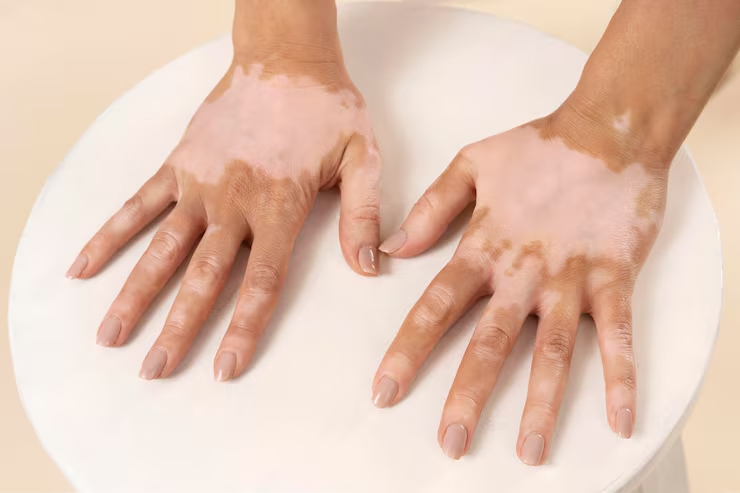
Vitiligo is a common immune disorder (skin condition). It occurs when melanocytes — the cells responsible for producing skin pigment — are attacked and destroyed by the body’s own immune system, resulting in white patches on the skin. It commonly appears on the face, hands, feet, lips, and areas around joints.
Causes and Triggers
The exact cause of vitiligo is not fully understood, but research points to a combination of factors that can contribute to its onset or spread:
- Autoimmune activity — the body's immune system mistakenly targets and damages melanocytes
- Genetic predisposition — a family history of vitiligo or other autoimmune conditions can increase risk
- Oxidative stress — cellular stress within melanocytes is thought to play a role in some cases
- Physical trauma (Koebner phenomenon) — new patches can sometimes develop at sites of injury, cuts, or sunburn
- Significant emotional or physical stress — often reported by patients around the time patches first appear, though it is considered a possible trigger rather than a direct cause
Vitiligo is not contagious, nor caused by diet or poor hygiene. It does, however, carry an emotional and social weight for many patients.
How Common is Vitiligo in India?
India has one of the higher reported prevalence rates of vitiligo in the world, with estimates suggesting it affects roughly 4%–8.8% of the population. Despite this, awareness of modern treatment options remains limited, and many patients rely on outdated home remedies or delay treatment due to social stigma rather than medical advice.
Treatment Options for Vitiligo in India
Vitiligo treatment tends to be most effective when the condition is stable — meaning no new patches for 6–12 months — rather than active, or still spreading. The treatment options fall into two broad categories.
Non-Surgical Treatments
Non-surgical treatment is typically the first step, particularly when the condition is still active.
Topical Therapy: A cream or ointment-based treatment usually recommended for smaller or more recently developed patches.
- Procedure: Corticosteroids or calcineurin inhibitors are applied directly to the affected skin, as prescribed and monitored by a specialist.
- How it works: These medications work by modulating local immune activity, which can help reduce further melanocyte damage and, in some cases, support repigmentation over time.
- Ideal for: Small, localized, or early-stage patches, particularly in patients who are not yet candidates for other treatments.
- Limitations: Results develop gradually over months, and prolonged use of topical corticosteroids requires monitoring due to potential skin thinning.
Phototherapy (NB-UVB): A light-based treatment administered in clinical settings over a series of sessions.
- Procedure: Affected skin is exposed to narrowband UVB light using specialized equipment, typically two to three times a week.
- How it works: Controlled UVB exposure is believed to stimulate residual melanocytes and support pigment cell activity in and around the patches.
- Ideal for: Widespread or actively spreading vitiligo, and cases where topical treatment alone has been insufficient.
- Limitations: Requires sustained commitment to a session schedule over several months, and response varies by body area and skin type.
Oral Medication: Used selectively, usually alongside other treatments rather than as a standalone approach.
- Procedure: Oral immunomodulatory or anti-inflammatory medication may help for a defined period, based on individual assessment.
- How it works: These medications aim to slow down the autoimmune activity responsible for ongoing melanocyte loss, primarily in active disease.
- Ideal for: Rapidly spreading vitiligo where stabilizing the condition is the immediate priority.
- Limitations: Generally used short-term and requires monitoring for side effects; not a repigmentation treatment on its own.
Surgical Treatments
Surgery is usually considered only once vitiligo has been stable for at least 6–12 months and has not responded adequately to non-surgical care.
Melanocyte-Keratinocyte Transplantation (MKTP): A laboratory-assisted technique that transplants a patient's own pigment cells to affected areas.
- Procedure: A small sample of pigmented skin is taken from a donor area, processed in a laboratory to separate melanocytes and keratinocytes, and applied to the prepared vitiligo patch.
- How it works: The transplanted cells re-establish pigment-producing activity in the treated area, allowing repigmentation to develop over the following weeks and months.
- Ideal for: Stable vitiligo on cosmetically sensitive areas such as the face, hands, and lips.
- Limitations: Requires laboratory infrastructure and specific surgical training; not suitable for active or unstable vitiligo.
Punch Grafting: A long-established, technically simpler surgical technique.
- Procedure: Small, full-thickness skin grafts (punches) are taken from a donor area and placed into matching sites on the vitiligo patch.
- How it works: Each graft carries its own melanocytes, which gradually spread pigment into the surrounding treated skin.
- Ideal for: Small, well-defined, stable patches.
- Limitations: Can occasionally result in a cobblestone-like texture or uneven pigment match, particularly on visible areas.
Blister Grafting: A minimally invasive technique that avoids some of the risks associated with deeper grafting.
- Procedure: Suction is used to raise blisters on a donor area; the thin blister roofs are then transferred to the treated patch.
- How it works: The transplanted epidermal layer contains melanocytes that support repigmentation while minimizing scarring at both donor and recipient sites.
- Ideal for: Sensitive areas where scarring or texture change is a particular concern.
- Limitations: Better suited to smaller areas, and the technique requires precision to achieve a consistent color match.
Split Thickness Skin Grafting (STSG): A technique used to treat larger stable areas in a single procedure.
- Procedure: A thin layer of skin is harvested from a donor site using a dermatome and placed over the prepared vitiligo patch.
- How it works: The grafted skin, along with its melanocytes, integrates with the treated area to restore pigment across a broader surface.
- Ideal for: Larger, stable patches where cell-based techniques would require multiple sessions.
- Limitations: Involves a larger donor site and a longer recovery period compared to cell-based grafting techniques.
Each technique differs in recovery time, suitability of donor area, and expected outcome, and the right choice depends on individual evaluation.
Vitiligo Treatment Cost in India
Cost depends on the treatment type, the size of the area involved, and the number of sessions required. As a general reference point:
- Non-surgical treatments (topical/phototherapy) tend to be the most affordable but require ongoing sessions over months.
- Surgical procedures like punch grafting are generally more cost-effective than MKTP due to simpler lab requirements.
- Melanocyte Transplant, being the most advanced treatment for vitiligo, typically costs more but often needs fewer overall sessions for comparable results.
Because these factors vary by patient, cost is usually confirmed only after an in-person evaluation. As a vitiligo surgeon in India, we assess the extent and stability of the condition first.